
Chapter 33 Close Calls
Chapter 33 Close Calls
From the Wrong Side of the Tracks...Chapter 33 Close Calls
Cargo Missions and Close Calls
There were a few times we were tasked with flying cargo for other countries. On three occasions, we had close calls. The standing operating procedures for the manager stated that once a month the manager should fly with the helicopter to the bases of the client. It was to ensure the client was still satisfied with the helicopter operations. I flew every trip I could with the crew.
The Mi26 was not an armored aircraft. It has the same fuselage as any other civilian aircraft. It was also not equipped with any countermeasures such as flares or decoys to counter any infrared homing heat-seeking surface-to-air missiles. It was no secret that the Taliban were targeting helicopters with shoulder-launched surface-to-air missiles (MANPADS), because helicopters are slower moving and low flyers.
Have you ever seen the movie Charlie Wilson’s War with the actor Tom Hanks? A true story set during the Soviet – Afghan War (1979-1989). The CIA had issued the Mujahedeen rebels with shoulder to air Stinger missiles during 1986, and they started shooting down Russian Mi24 assault helicopters, also known as the Hind attack helicopter. Unfortunately, I saw this movie long before I knew I would ever work in Afghanistan and be flying in the Mi26. I always wished that I had never seen that movie. While working in Afghanistan, I heard from military intelligence that the Taliban still had some of these Stingers in their possession and the US was offering huge amounts of money to anybody that would hand these Stingers back to them.
The first close call I had was when we were tasked to fly a container for the British to their primary base called Camp Bastion. We did it with a sling load, which is transporting a container on a sling hanging below the helicopter. The flight went well. We landed at Bastion and delivered the container. It was a boiling day with the temperature at 49 degrees Celsius. At Bastion, we were tasked with taking another container to a British base in the Sangin district with its surrounding hills in the opium-growing heartlands of the Helmand province. This district became the site of Britain’s heaviest casualties and losses in Afghanistan.
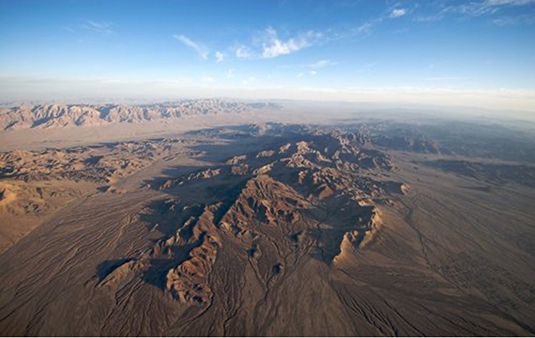
Flying over the Helmand Province

Flying over the Helmand Province
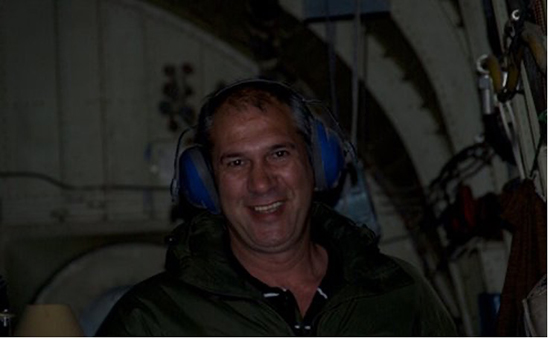
Cargo Bay of the MIi26T
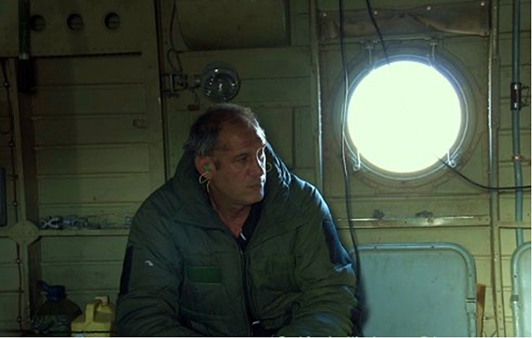
Cargo Bay of the MIi26T
We landed at Sangin, and the offload was done quickly, and we were airborne again on our way back to our base in Kandahar with an empty helicopter.
When it was extremely hot, I learned that the best place to be was in the cargo bay of the helicopter with its portholes open to allow lovely cool air coming in while we were cruising at an altitude of 3800m (12,4671ft).
The cargo bay was very noisy. It was very difficult to communicate with the loadmaster, who usually travelled in the back, constantly inspecting the load. On this day, with no load, the loadmaster was sitting in the cockpit and I had the whole cargo bay to myself. The portholes were open, and I pushed down four of the tip-up steel chairs that ran down on both sides of the helicopter under the portholes. By doing this, I made a bench, and I laid on it enjoying the cool air circulating through the cargo bay. As we approached Kandahar airfield, I went and sat in the cockpit.
On every return, the ground crew were always waiting for the helicopter and guiding it into its parking space. Once the helicopter was shut down by the captain, the ground crew would board the helicopter to receive a mechanical report from the captain. Then, they would start their inspection of the fuselage and engines for any problems or defects. I transported the flight crew back to our base while the ground crew continued their work on the helicopter. As we were driving away from the helicopter on that specific day, my phone rang. It was the chief ground engineer requesting us to come back to the helicopter immediately. I turned around and drove back. As we stopped, the chief engineer came running and started chattering to the captain in Russian. From the captain’s reaction, I realised something serious was wrong.
The chief ground engineer led us to the back of the helicopter, where the rest of the ground crew stood. He walked to the two back cargo bay doors and pointed out two holes. He bent down and showed us another three holes at the bottom of the helicopter. We opened the cargo bay doors and entered the hold. Two gaping holes, through which the sunlight shone, could be seen in the roof. On closer inspection, we found a bullet embedded in one of the steel ribs running across the roof of the helicopter. I looked again at the exit holes in the roof, and I noticed that the entrance holes on the floor were about a meter behind from where I had been lying stretched out on the chairs.
After taking photos for a damage report, I also reported the damage to our client. In the meantime, the ground crew started serious patching up of the fuselage. I kept the bullet and had it identified as an armored piercing 7.62mm round fired from a Russian PKM light machine gun.
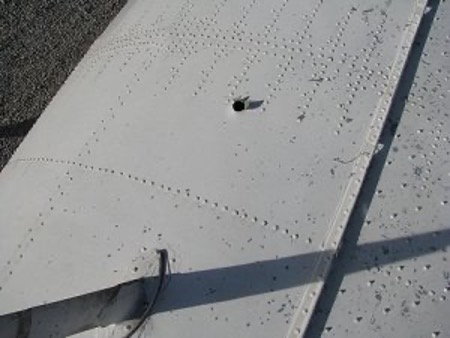
Bullet holes Mi26T Helicopter fuselage

Bullet holes Mi26T Helicopter fuselage
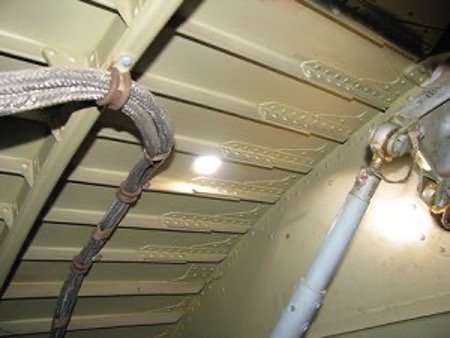
Bullet holes nside the Cargo Bay

Bullet holes nside the Cargo Bay
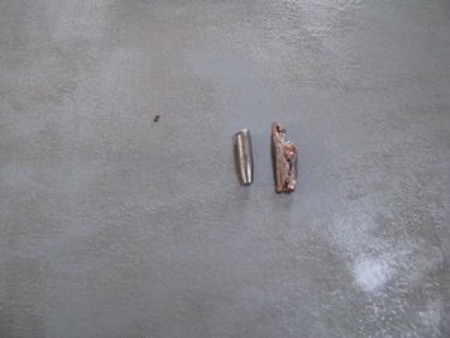
Russian 7.62mm PKM machine gun bullet
It is a known fact that the Taliban had these types of Russian weapons in their possession and that they engaged aerial targets with this specific weapon. We could not identify exactly where the incident took place, but we suspected that it could have happened on takeoff in the Sangin area while the helicopter was climbing to its flying altitude.
The other incident also happened in the British-held Helmand region in the Kajaki Dam area.
The Kajaki Dam is on the Helmand River, 161km northwest of Kandahar. The dam has two functions, to provide electricity and to irrigate 650 000 acres of an otherwise arid land.
The Kajaki Dam was built in the 1950s during America’s first push to make Afghanistan a modern country and an ally. The US turned it into a hydroelectric power station in the 1970s, but abandoned the project before completion when Russia invaded in 1979. Only in 2004, three years after the US invasion, USAID (The United States Agency for International Development) restarted the project. They successfully refurbished two turbines that were nearly inoperable after two decades of neglect, and the dam began producing some power. The genuine success hinged on a third, modern turbine that could vastly increase the power throughout the area. That edition was to have been completed a decade ago.
The only problem here is that the Kajaki Dam is smack in the middle of the spiritual homeland of the Taliban and where they have the most support amongst the population. The Kajaki district was and remains one of the most insurgent-infested areas in Afghanistan. There are limited options to get to the dam, and the Taliban was preventing workers and supplies from getting to the dam.
During 2008, the USAID came up with a plan. On a grueling and dangerous five-day effort, thousands of British and American troops hauled a 220-ton turbine on trucks the entire length of a Taliban-infested province, and delivered it to the dam.
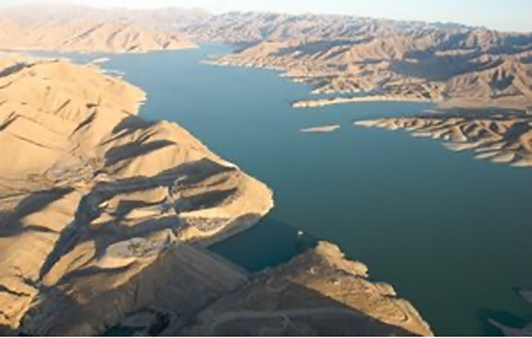
View of Kajaki Dam taken from Mi26T
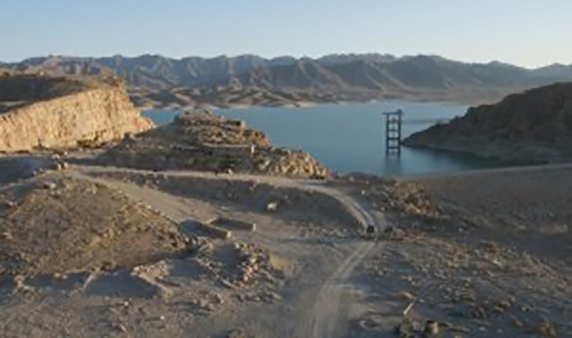
View of Kajaki Dam taken from Mi26T
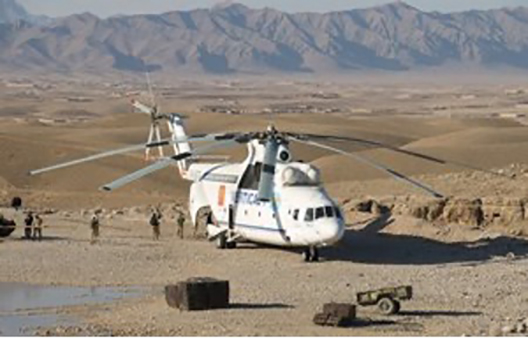
Mi26T offloading cargo at Kajaki Dam
After that, supplies had to be airlifted to the dam. Our close call happened because of this. For two weeks, we were transporting heavy material from Kandahar airbase to the dam. We approached the dam by flying in over the Kajaki Lake and onto a small (LZ) landing zone on the very edge of the dam, just big enough for the Mi26. British Marine Commandos protected the dam, and they assisted with the offloading of the heavy cargo. Only three kilometers surrounding the dam were safe. Beyond that, the Taliban were waiting. Their mission was to destroy the dam.
During the second week of our deliveries, we took off over the lake again, as with every other take-off. The captain put the helicopter into a steep climb. I was seated on the small jump chair between the two captains. I was looking out of the chief captain’s window on the left. The patch of blue-green water that was the dam, became smaller and smaller as we were ascending. I noticed a midair explosion a few hundred meters from our port side. The captain also saw it and smiled and shook his head. After a few minutes went by, I asked him what that was. He said that it was an RPG missile that exploded. It was aimed at the helicopter. I was not going to argue with him as he was an ex-Hind attack helicopter pilot during the Russian invasion of Afghanistan those years, so he would know. I reported the matter to our client, who contacted the British Commandos at the dam, and they also confirmed it.
On the last two trips we made to the dam, we had two Apache helicopters flying with us for protection. We were a huge target in the sky. I recently read somewhere that more than $300 million was spent on the Kajaki Dam and that the turbine was still sitting unassembled in its rusting containers at the dam. For the Afghans to install it, however, 700 tons of concrete still needed to get to the site through the same Taliban territory the turbine travelled years earlier, but without British or American military forces to deliver it this time.
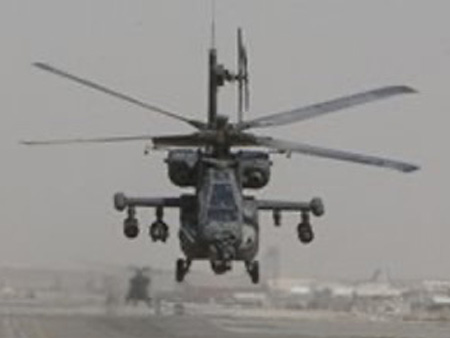
Apache Escort to Kajaki Dam
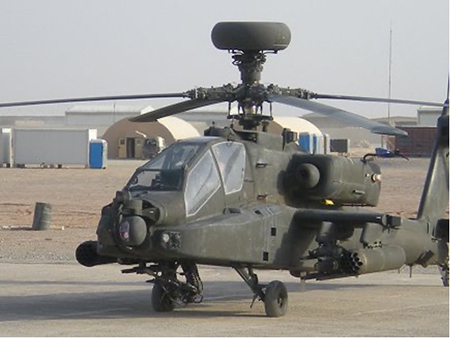
AH-64 Apache Attack Helicopter and two-man crew
On information released by USAID at the start of the war, less than 6% of Afghans had access to electricity, and now 30% of the population was hooked up to an electrical grid. But with the Kajaki Dam incomplete, the electrical grid incomplete and no money for fuel at the two generator plants the US built as a temporary, stopgap measure; most of the lights remained out. The US stopped paying for fuel once its troops left Afghanistan.
The Taliban had recently seized many cities in northern Afghanistan near the dam, and their dominance of the area now is such that they control at least a third of the output from Kajaki Dam, collecting taxes from the people for its use.
Another close call was when we were flying armored vehicles into a mountain base for the Czech Special Forces. During September 2009, a Captain from the Czech Special Forces approached me. He told me they were taking serious casualties at a mountain base they were manning in the southeast of Afghanistan. The reason was that they were patrolling with soft skin vehicles in the mountains, and they were shot at by the Taliban from their mountain hideouts. On Kandahar airbase stood four armored vehicles, and they had no way of delivering these vehicles to his men in the mountains.
As much as I would have liked to help him, I had no authority to use the helicopter as it was contracted to the Dutch military, who did our daily scheduling and who paid us. I decided to take it up with the Dutch. After lengthy discussions that eventually got the governments of the two countries involved, along with the Russian owner of the helicopter and my boss in Australia, we got the go-ahead.
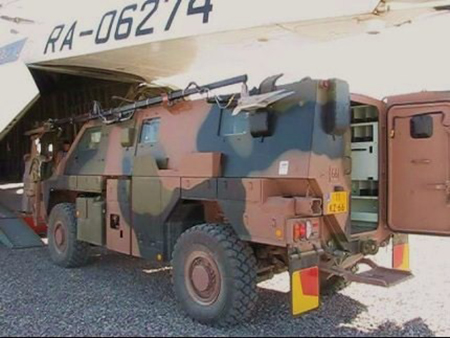
Bushmaster Armored Vehicle for Czech Special Forces
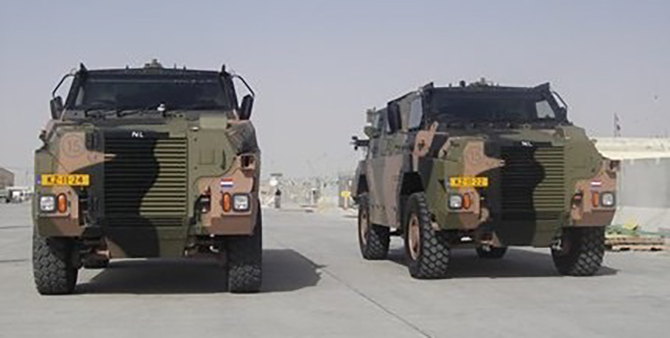
Bushmaster Armored Vehicle for Czech Special Forces
This was a logistical nightmare because of the high mountainous terrain where the Czechs were based. The weight of the armored vehicles, the fuel for the helicopter, the altitude and distance to the base, and also the danger in that area required a lot of planning. We needed aerial photos of the LZ (landing zone). The Mi26 flight crew, the Czech Commander and I sat many nights planning the operation. The Czech Commander was very efficient, and he provided everything we asked for.
Once everything was in place, we decided on a date for the operation. I was supplied with intelligence in connection with the Taliban activity in that area every day prior to our date of departure. The location of the LZ was a perfect flat terrain. The Mi26 would land between two mountains, which were very close to each other, and which provided the cover we needed. On the mountains, the Czechs had special force snipers and spotters, and we would also have soldiers guarding the LZ. The Mi26 Captain was happy, and it all depended on him now to get us up to the high mountains with our heavy load.
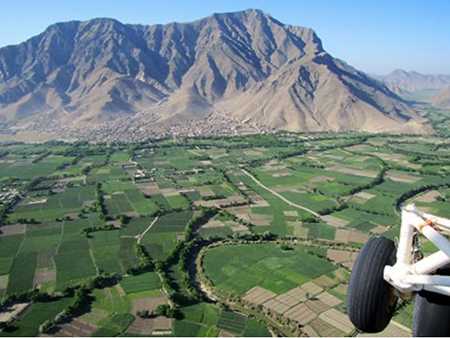
Near Kandahar Airfield
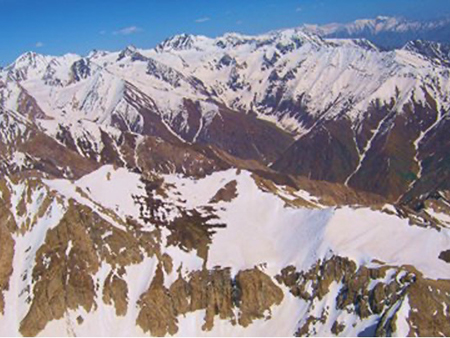
Treacherous snow-covered Hindu Kush Mountains
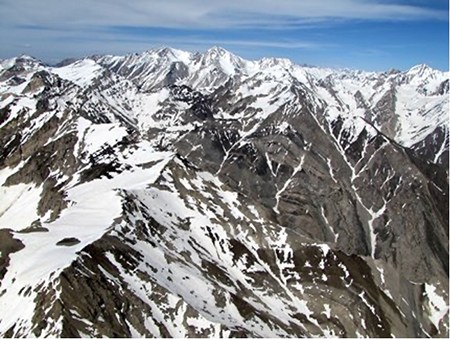
Mountain range reaches up to 24,445 ft (7,451 m)
On the morning of the departure, the first armored vehicle was loaded and tied down in the helicopter. These vehicles were known as Bushmasters IMV (Infantry Mobility Vehicle) and one vehicle weighs 15,400 kg (33,951 lb). Three more stood parked waiting to be loaded on the next few flights. The flight engineer and navigator calculated that we should fly to the Dutch/Australian base in Tarin Kowt, where we would refuel and then start the flight up into the mountains.
As the sun started rising, we went airborne with our cargo. In Tarin Kowt, we took in the calculated amount of fuel and started the climb. Most of Afghanistan is a rugged, inhospitable mountainous landscape.
Over 50% of the total land area lies above 6500ft (2000 m). Afghanistan’s highest point is Mt. Naw Shak, which peaks at 24,445 ft (7,451 m). This is all part of the Hindu Kush, an 800 km long mountain range that stretches between central Afghanistan and northern Pakistan with its highest point at 25,288 ft. (7,708 m) and known as Tirich Mir, which is in Pakistan. In comparison, the highest mountain in South Africa is the Drakensberg with a height of 11,318 ft (3450 m).
We had been flying for about two hours when we came into the LZ area. I could see the two mountains that would give us cover upon landing. On our approach, a green cloud of smoke started drifting from the ground upwards. That was the pre-arranged signal that all was safe for landing at the LZ.
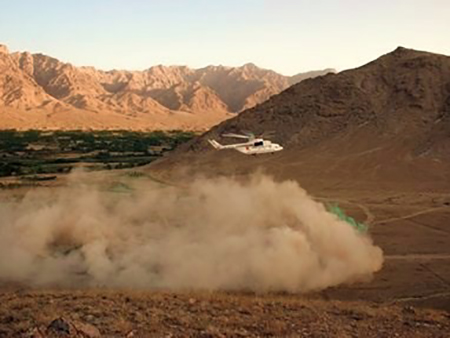
Coming in to land at the LZ
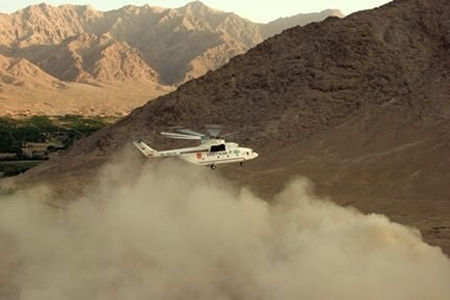
Seconds before Helicopter engines to fail
The captain guided the helicopter to the landing spot and hovered while he was planning how to do the landing. We started going down in a vertical descent and, at the same time, a choking cloud of dust, sand and debris billowed up from the ground completely obscuring the LZ and cutting visibility to zero. I have learned that the pilots will call this a brownout.
Then, with the rotors still spinning, the helicopter completely dropped out of the sky. We were in a free fall as we lost our engines in a 40-foot hover, as I was told later by the co-pilot.
The LZ site survey that was done never informed us of the amount and type of sand on the LZ, or the matter was never raised by us. The helicopter turbines sucked in massive amounts of sand that was thrown up by the eight rotor blades and that caused the engines to fail. The impact when we hit the ground was not as shattering as expected. The fixed tricycle landing gear with dual wheels on each gear and the tail bumper took the impact. I could see on the faces of the crew that we had just had a near-death experience, as was confirmed to me by the navigator later that day.
The back door was opened by the captain, and the Bushmaster was driven out of the cargo bay. During this time, the rotor blades were still spinning, and the visibility because of the swirling dust and sand was very poor.
Soon after the flight engineer did a quick damage assessment, the loadmaster and I got back into the helicopter, and I heard the engines start up and the doors closed. We took off. There was silence, and nothing was said among the flight crew as we were flying back to Tarin Kowt to refuel for our trip back to our home base in Kandahar. While taking on fuel in Tarin Kowt, the navigator approached me and told me how lucky we were to be alive.
Back at our base in Kandahar, the incident was again discussed with the Czech Commander present. It was suggested by the Mi26 crew that the Czech special forces wet the LZ thoroughly with water every time before the next landings with the rest of the Bushmasters. This was done, and in the following days, the rest of the Bushmasters were offloaded and received by happy troops up in the mountains.
The Czech Special Forces Commander and his troops appreciated our help so much that they held a medal parade at their base in Kandahar in honour of the Mi26T crew and me. We each received a medal and a Certificate of Appreciation for our role in the delivery of the armoured vehicles. I was also given a few photos taken by one of the spotters on the mountain as the Mi26 started its vertical landing seconds before we dropped out of the sky. The amount of dust billowing up to the helicopter can be seen clearly on the photo. I had the certificate and photo framed, and I often look at the photo thinking how lucky I was, once again.
My friend from Cape Town who had arranged the contract, eventually arrived in Kandahar to take over from me after I did my first two months. I wanted to kick his arse for putting us into a world that we knew nothing about, but by now I was enjoying the challenge and couldn’t wait to get back after my break. He was more fortunate than I was, as I stayed with him for about a week. I took him through all the tasks as the Helicopter manager. I had only two days with the manager that preceded me, and he had seven days.
My company flew me back from Kandahar to Dubai, where I got a connecting flight back to South Africa early the next morning. Arriving in Dubai, I went straight to my hotel room and had a long hot bath, staying in the bath for about an hour. This became a ritual every time I arrived in Dubai from Kandahar. On the Kandahar base, there were no baths, only showers that were shared with the Russian crew, other flight crews and the Dutch soldiers who lived on the same base as us.
I did not even think of leaving my hotel as the incident with the Arab man in the sports pub was still too fresh in my mind.
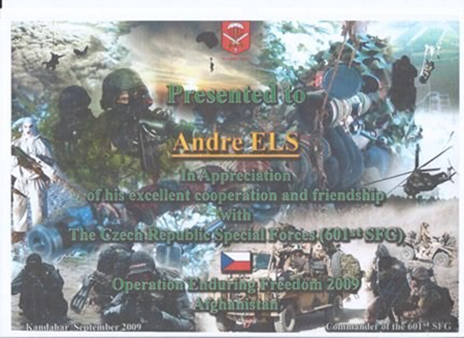
Certificate of Appreciation awarded to me by the Czech Special Forces
Photo by Image by freepik:
