
Chapter 32 Kandahar Afghanistan
Chapter 32 Kandahar Afghanistan
From the Wrong Side of the Tracks...Chapter 32 Kandahar Afghanistan
Life at Kandahar Afghanistan
I was flown from Dubai straight to Kandahar, where I would be based and work from the military base at the Kandahar airport.
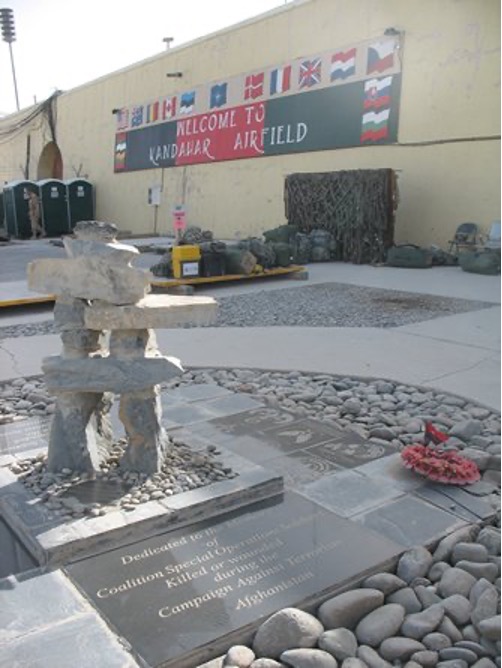
Kandahar International Airport is 16 km southeast of Kandahar city. It is one of the largest airports in Afghanistan, and the largest military base capable of housing up to 250 aircraft of all types. Since 2007, NATO has maintained the airport under the ISAF banner, although it was a prominent base for the US and Canadian Forces. Many other armed Forces were also based there.
The British used Kandahar as their main staging post for the South and flew directly into the Helmand Province. Fighter jets and combat helicopters were also deployed from there as it was the main airport in the country’s south.
NATO operated a major trauma hospital at the base, treating battle casualties, including Afghan civilians and enemy Forces.
During 2009, the surge in NATO operations in southern Afghanistan pushed the number of aircraft operations at the base from 1700 to 5000 flights a week. These numbers meant Kandahar became the busiest airport comprising one runway in the world.
With my arrival at the base, the departing manager, who was an Australian, met me. My friend from Cape Town who arranged the contract, was still finishing off his existing contract in another part of Afghanistan, so I was to be the first to start on the helicopter contract. The departing manager made me understand he was leaving in two days’ time and that he had a lot to show me.
It was very true as and I was not shown half of what I had to do. I was shown my accommodation. A forty-foot container that was divided into two areas: my sleeping area and my office. The containers were packed next to each other in rows of twenty, with one way and another row of twenty on the opposite side. A roof was built over the containers, with a passage running down the middle and a door at the end on both sides. My departing manager took me to meet our client, the Netherlands military.
As confusing as this may sound, the role players in this contract were as follows:-
The helicopter was owned by a Russian company with a Russian and Belarusian crew contracted to an Australian company that was then sub–contracted to the Netherlands Ministry of Defense with two South Africans as the managers overseeing the operations and liaisons between the three countries.
The Netherlands defense force or military had been in Afghanistan since 2002 as it was also a NATO member state. It supplied troops and was part of the International Security Assistance Force (ISAF). In the early years of ISAF, the Netherlands military was based in Kabul and Bagram, but in later years, specifically since 2006, their troops were also moved to the south of Afghanistan in the Helmand, Kandahar and Uruzgan provinces. During April 2006, two Dutch camps were set up near the provincial capital of Tarin Kowt and the district capital of Deh Rahwod.
This was a construction mission, and the unit consisted of roughly 850 quartermasters, who operated from the international military base at Kandahar Airfield. It comprised engineering and logistical elements. The logistics specialists and engineers brought in hundreds of containers and vehicles via the United Arab Emirates and Pakistan before transporting them from the storage and cross-loading point from Kandahar to the two sites in Uruzgan, Tarin Kowt and Deh Rahwod.
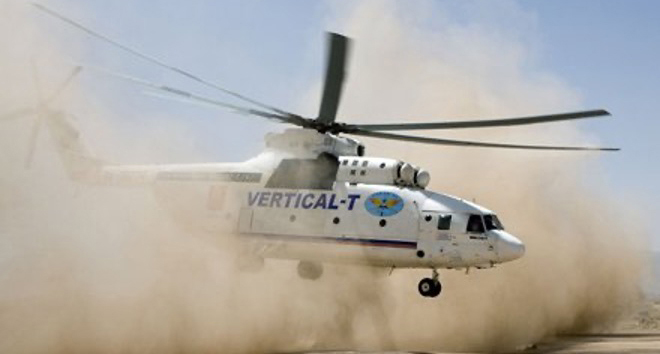
This is where I and the Mi26 come into the story. Flying under contract for the Netherlands Military, the Mi26 helicopter, being a heavy lift aircraft, was used to transport all types of cargo to these bases. The cargo included containers, munitions and vehicles.
After the introduction to the Dutch officers I would work with, I was driven to the airport to be shown where the helicopter was parked on its designated parking ramp.
The first time I saw this monster, I could not believe how big and ugly it was with its eight rotor blades hanging limp over the fuselage, but in the same breath also a magnificent aircraft.
Mi26T HELICOPTER SPECS
The specs on it are as follows.
The Mil Mi26 is a Soviet/Russian twin turbine heavy lift transport helicopter operated by both military and civilian operators. It is the largest and most powerful helicopter to have gone into series production.
This helicopter has the load-carrying capability of a domestic C130 transport plane. Its cargo area with the rear ramp closed is 12m long and 3,2m wide with a minimum ceiling height of 2,9m. The helicopter is also fitted with an internal crane system. This cargo area can hold two combat vehicles weighing 9988kg each. The interior can be configured to seat 80 combat-equipped troops or 60 stretchers.
The helicopter is flown by a crew of four: pilot, co-pilot, flight engineer and navigator, with two loadmasters to complete the crew. The flight deck and cabin are fully air-conditioned, but only the flight deck is pressurized. The helicopter’s landing gear is a non-retractable tricycle type with a steerable nosewheel. The main gear can be hydraulically adjusted to facilitate loading through the rear door. This adjustable feature is also used when landing on varied surfaces. Each of the main gears has a sensor to determine takeoff weight. This information is displayed at the flight engineer’s station at liftoff. The helicopter’s retractable tail skid offers unrestricted accessibility to the rear cargo loading door. Because of its sling load capability, there is a hatch on the underside of the fuselage that opens to give access to a load sling. This sling is attached to an internal winch that is in line with the main rotor shaft. Closed-circuit television cameras enable the crew to monitor the load beneath the aircraft.
This helicopter was the first to fly with an eight-blade main rotor successfully. This rotor is 32m in diameter and is made of composites and aluminium alloys, with a leading edge of titanium. The main rotor head and the tail rotor head are both made of titanium. The flight controls are hydraulically boosted with a redundant autopilot and stability-augmentation system.
The tail rotor has about the same diameter and thrust as the four-bladed main rotor fitted to the MD helicopters (American light utility civilian and military helicopters).
Two Lotarev D-136 turboshafts power this enormous helicopter with a combined output of 22,480 shaft horsepower or 16,760 kW. Each engine bay is made of titanium for protection against fire.
The length of the helicopter is 40m with a height of 8.14 m. The empty weight is 28.2t and the weight (maximum takeoff) is 56t.
It has a maximum speed of 295km/h and a service ceiling of 4.6km and a range of 1952km. The payload is 20t of cargo.
The Mi26 is also known as the “Halo” with NATO.
Anyway, that was just to give you an idea of the size of that beast, but you have to see it for yourself to appreciate it. Little did I know that for the next three years I would work with it, fly on it and look after its safety.
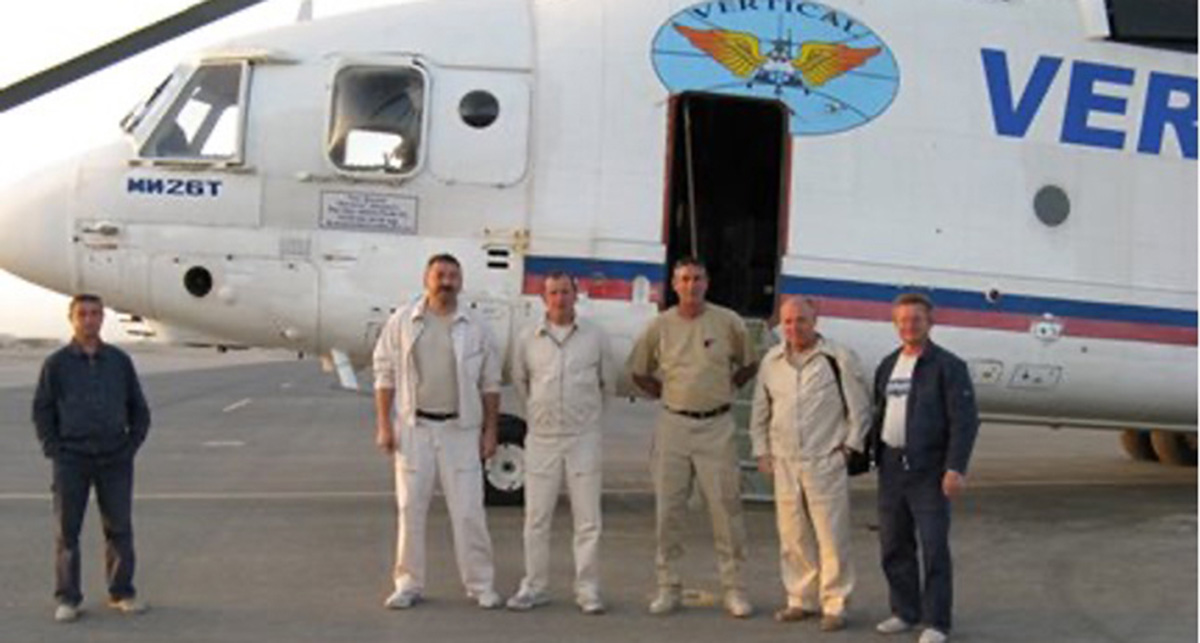
Mi26T Helicopter Crew
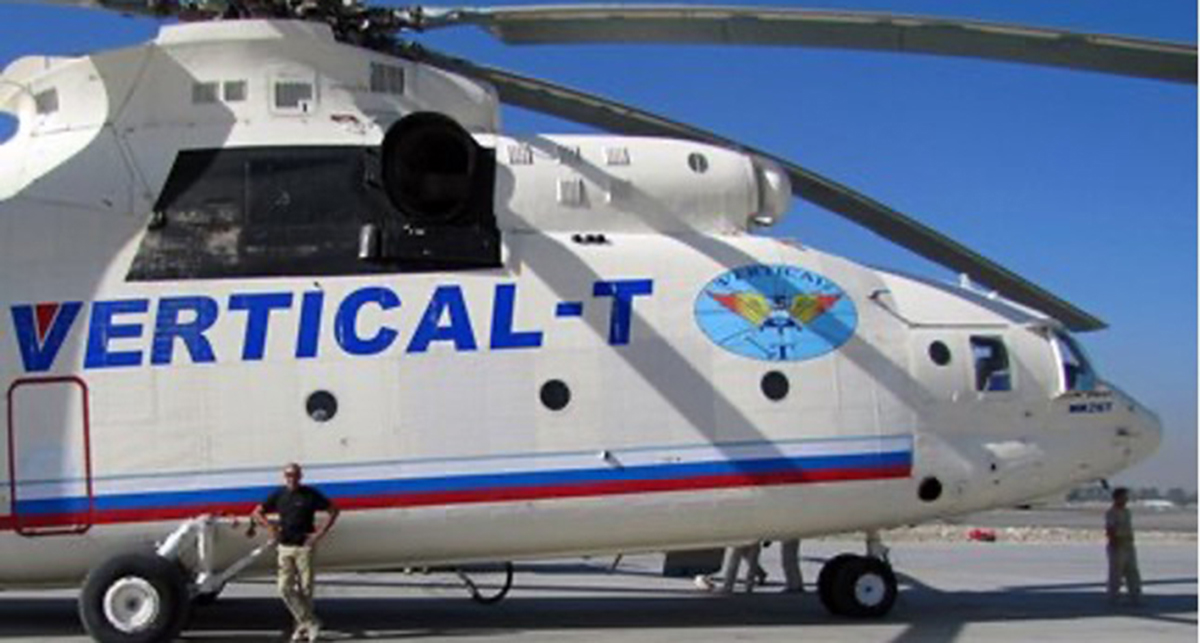
Dwarfed by the Mi26T
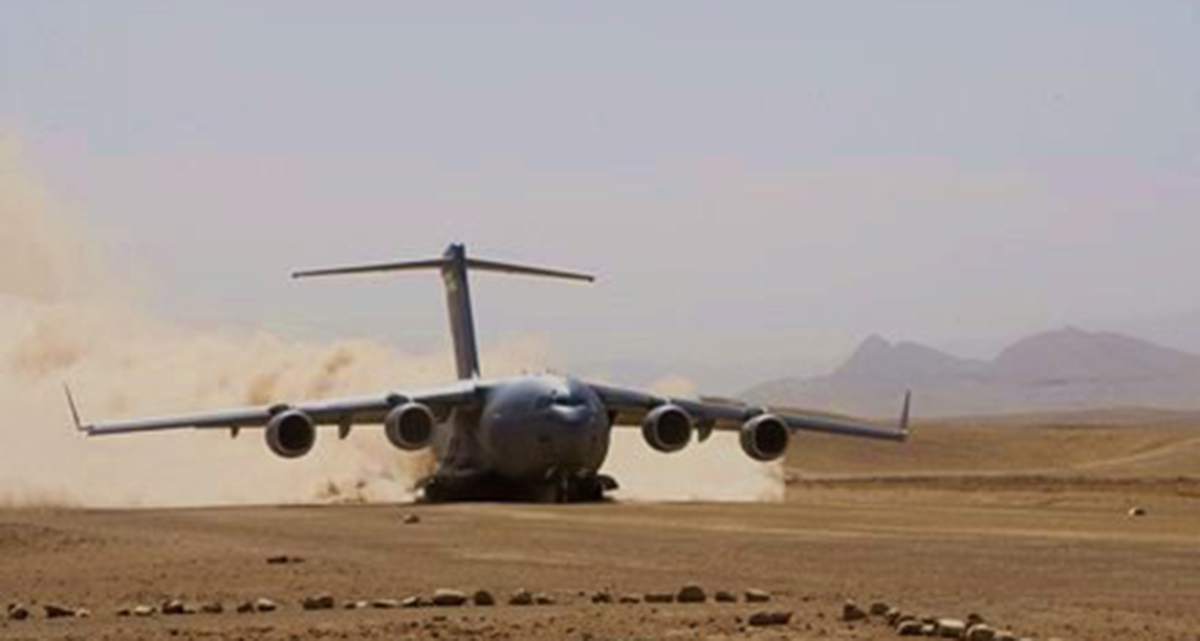
C17 Tarin Kowt
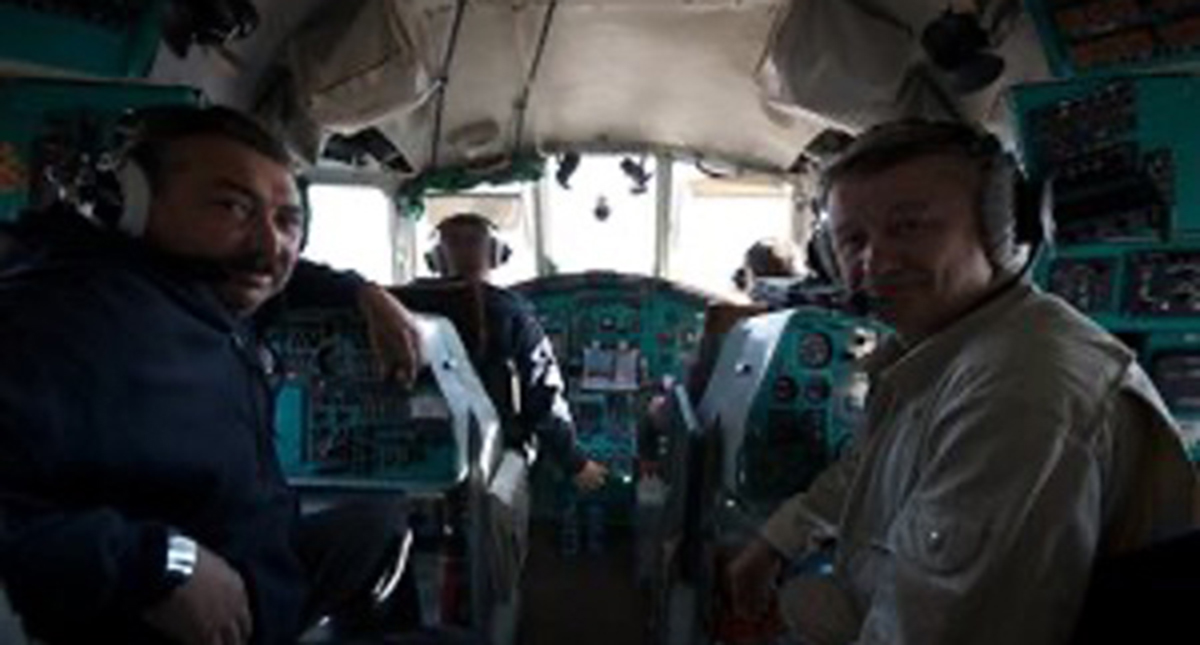
Mi26T Cockpit
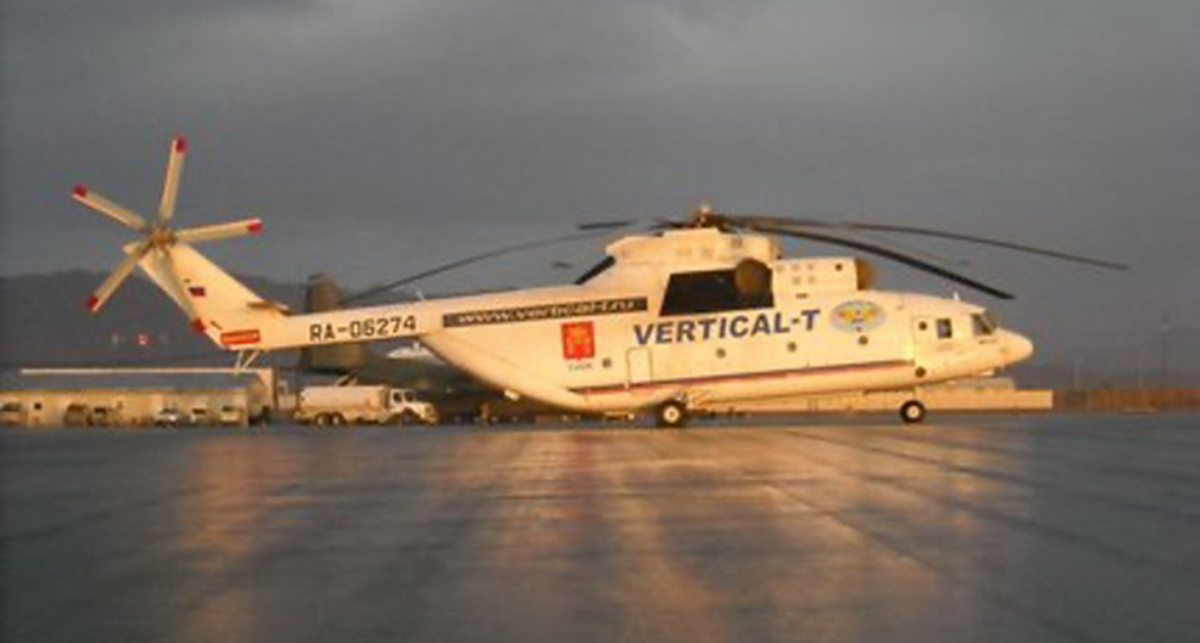
Kandahar Airfield
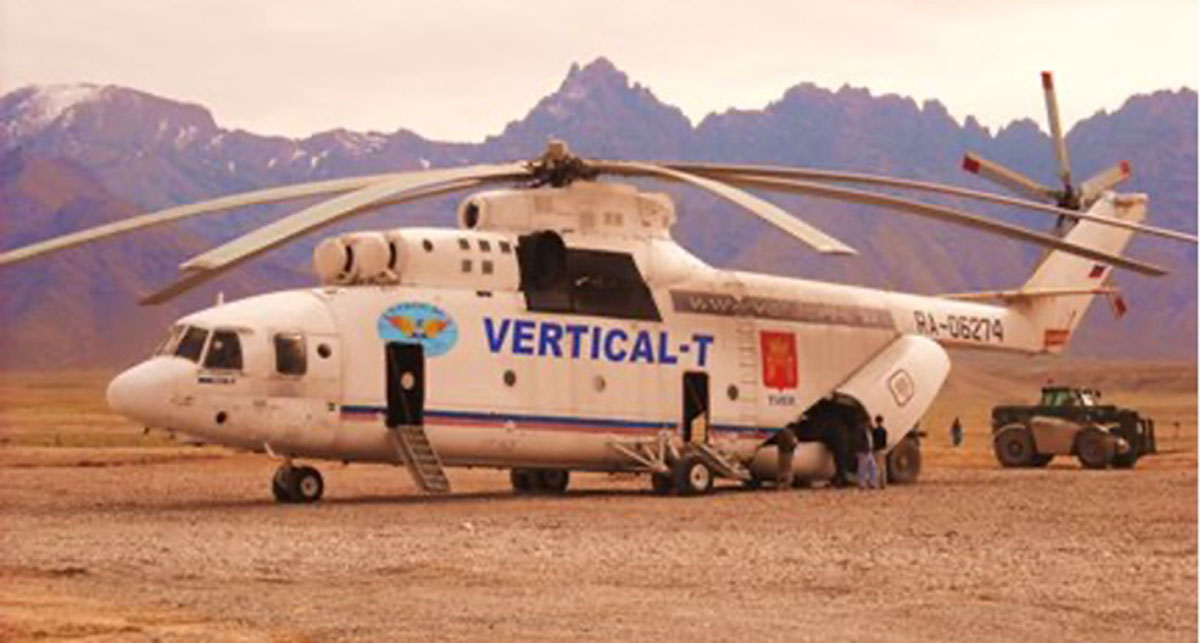
Deh Rawod Base
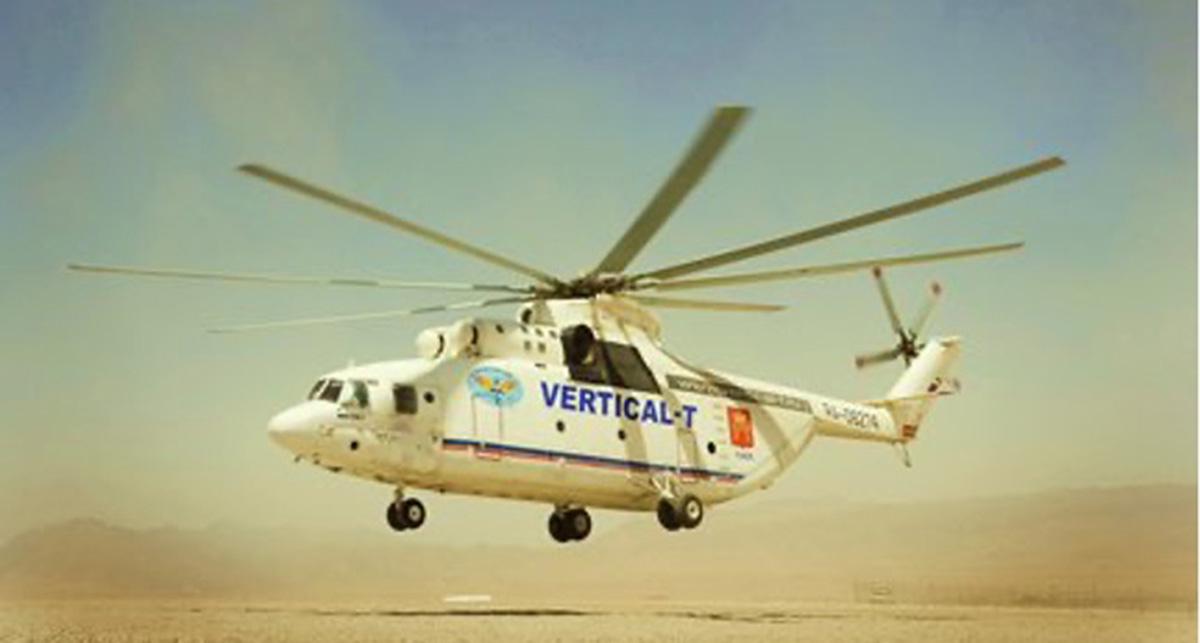
Mi26T Tarin Kowt Base
Mi26 Take Off Tarin Kowt
Driving back to our base, I saw the size of the airport and all the types of aircraft parked at the airport and hangars. It was military planes I have only seen in magazines and in movies. Fighter jets, bombers, spy planes, helicopters, civilian planes, drones — you name it, they were all there. Aircraft were landing and taking off all the time.
It was time to meet my Russian crew. There were the flight crew and the ground crew. The flight crew consisted of the (captain) chief pilot and his co-pilot, navigator and flight engineer. The ground crew was all ground engineers, mechanics, an electronic engineer and the two loadmasters. The ground engineers and mechanics were the ones keeping the helicopter airworthy and flying. I was introduced to them, and I realized I was going to have a major language problem as out of the fourteen of them, only the Captain, the navigator and the chief ground engineer could speak English. I was now face to face with my old enemies from Mother Russia, and none of them looked like the Red Danger we were told about back in the day. They were all smiling, laughing and joking in Russian.
The departing manager took me around the immediate area of our base and showed me the hospital and other important places to remember. I was happy that the mess hall (dining facilities) was the same American setup that we had during my time in Iraq. I had dinner with the Manager and the food was good. That night we sat till late, going through the standard operating procedures written for the Mi26 Manager. It was too much for one night, so we decided to continue the next day.
Before I fell asleep that night, I was thinking about what I had seen and learnt that day. I wondered if I had not bitten off too much this time as I was now in a profession I knew nothing about, and I had to learn very quickly or go back to what I knew. I told myself this was a challenge and I would do it. I was adamant to kick my friend from Cape Town’s arse as soon as we met up again.
Two days later, the old manager flew out, and I was on my own and alone. On my first night on the base, I was told the people living opposite me were South Africans and on the same contract. They were the flight and ground crew and the manager of a C130 Hercules cargo plane.
I met with the manager, and he straightaway wanted to know what my experience was with helicopters. He asked me where in the South African Airforce I was based before coming to Afghanistan. All the South Africans on this C130 aircraft were ex South African Air Force. They were now employed at this private aviation company.
‘No, I was never in the Air Force,’ I answered him. ‘I am an ex cop’.
He nearly fell off his chair when he heard what I said.
‘So you have no experience with helicopters?’ he asked.
By now I was getting agitated with his questions.
‘I am not flying the bloody thing. I have two pilots to do that. I am managing it,’ I said.
‘But I will know everything there is to know about the helicopter and the aviation rules that come with it soon?’ I added before excusing myself.
‘Do you speak Russian?’ he asked as I was walking out of his office/room.
‘Because your crew speaks no English?’
‘I have a Russian dictionary,’ I said and disappeared into my office/room.
I really had a lot to learn in a very short time, and I sat night after night going through the manager’s SOP and reports, flight details, aviation rules and all the stuff I had to do and know.
I received my first task from the Dutch about three days after my arrival. We had to load two vehicles and fly them to one of the Dutch bases. The place was Tarin Kowt. The pre-flight arrangements worked as follows. The day before a flight, the Dutch will give me the destination, the type of cargo and the weight of the cargo. I would then sit down with my navigator and give him all the details. He would then work out the amount of fuel we would need by doing a calculation of the weight of the cargo we’ll be carrying. The terrain and altitude would be taken into consideration as well.
The night before the flight, I had to get an Intel briefing (Intelligence briefing) compiled by the military intelligence on the area we were flying into. If there had been any small arms or rockets fired at any aircraft in that area in the last 24 hours, the risk was described in colored code — green, orange or red. As it was my duty to keep the crew and the helicopter safe, I had the final say about whether or not we were going to fly after considering the risk involved. The captain was always consulted, and he had the final say in any other matter, his decision stood.
On the morning of the flight, with the load manifest in the hands of the two helicopter loadmasters, we were at the airfield very early. The Dutch, with their cargo, arrived early as well and handed it over to the loadmasters for loading. The loadmasters had planned the loading specifically based on the weights of the items on the manifest and where they would be positioned on the helicopter. The items were then tied down to rings fixed to the aircraft flooring to prevent movement and shifting of the load during flight.
At this stage, the helicopter would have already taken on the amount of fuel the navigator requested after he took the weight of the cargo into consideration and the distance of the flight. The fuel capacity of the Mi26 is 13020 liters.
During the loading process, I would take the pilots and the navigator to the weather office where they would get a live weather briefing for the day. The night before the flight, I would apply for PPR Numbers (Prior Permission Required) which are necessary for authorization for the helicopter to land at their destination, and without which landing clearance could be denied. All of Afghanistan was PPR required for aircraft as it was a war zone. Movement control permission was also required for the airfield we were based on. This meant we were instructed where to park and when we could land and take off.
If everything were in our favour, we would be ready for takeoff at sunrise. The summer heat was our problem in Afghanistan. The hotter the weather became, the smaller our cargo weight became, and that is why the early takeoffs were necessary.
The Mi26 did not like hot weather. It loved the Siberian winters, and it performed at its peak in cold weather. In the winter in Afghanistan, the rain and snow posed another problem. This would reduce visibility for the pilots, who were limited to flying in visual conditions, which was necessary to get clear of the surrounding terrain.
In an unfortunate incident a few months before my arrival, the previous Mi26T flew into a mountain in the Tarin Kowt region because of snow and cloud causing reduced visibility. This resulted in the loss of the entire crew of six and the helicopter.
The flight to Tarin Kowt was my first flight on the Mi26, and I will never forget it. I sat on the jump seat between the two pilots and watched them fly this massive chopper.
The airstrip in Tarin Kowt at that stage was just a dusty runway, and aircraft with short landing and takeoff capabilities were the only ones to visit there. Although the Mi26 pilots, depending on the weight of the cargo, could use the runway for landing or takeoff like a fixed-wing aircraft, they also did vertical landings and takeoffs. At Tarin Kowt, the Dutch military stationed there would collect the cargo we offloaded and would load other cargo again for our return trip to Kandahar.
As we were contracted to them, we only flew their cargo to the military bases they occupied. The two main routes were Kandahar to Tarin Kowt and Kandahar to Deh Rahwod.

Photo by Image by freepik:
