
Chapter 28 Iraq Personal Security Detail
Chapter 28 Iraq Personal Security Detail
From the Wrong Side of the Tracks...Chapter 28 Iraq Personal Security Detail
From Baghdad to Basrah — A vivid, boots-on-the-ground chapter by PSD operator Andre Els
In the meantime, there was a war in the Middle East after the 9/11 attack on America in 2003. I heard that there were a lot of South Africans operating as contractors in Iraq and earning good money.
The contractors were mostly South Africa’s former security forces personnel that were recruited by foreign companies. The reason they were popular was obvious. They were well trained and, because of their military and police backgrounds, they were reliable and experienced. With the new government in South Africa, these men found it difficult to get work in their own country. Another reason was the weak South African rand compared to the US Dollar. Working in Iraq, these guys were paid in USD. Most of the South Africans employed in Iraq were employed as PSD Members (Personnel Security Detail). A new term for bodyguards.
Other available jobs were guarding oil pipe lines. Static guards and heavy duty truck drivers were some positions the South Africans were employed in. It was August 2004. I was on my way to Iraq.
A few months before I left for Iraq, I was offered a contract in Afghanistan, but could not accept it as I was still tied up in another contract. I gave the offered contract to my old friend from Cape Town, who was going through a tough time trying to secure decent work. He was too happy to accept and soon left for Afghanistan.
Leaving for Iraq, I was part of a group of fifteen guys who met with at Johannesburg International Airport. Most of us were ex policemen and three of the guys had only just resigned the day before were to leave. Our route took us from Johannesburg to Dubai and then to Jordan, where we waited for a few long hours before boarding a flight to our final destination. Baghdad.
I will never forget when walking off the plane in Baghdad, the extreme heat that stole your breath. The tarmac was melting. The temperature was close to 50 degrees Celsius. A stinking, burning smell hung in the air.
I looked around whilst walking towards the terminal and noticed several aircraft wrecks. Some half burned out. Parked all over the airport was proof of the American invasion of Iraq. There was plenty of activity going on at the airport. Military planes landed. Others took off. There was a constant flow of military helicopters in and out of the airport.
This is where I had my first encounter with an American. After the long flight, my lungs were screaming for a cigarette. As soon as we entered the airport building, I found a smoking section. With me was another ex-cop. We started chatting at the Johannesburg airport, and we sort of bonded on the trip over to Iraq. As I lit my cigarette, a bearded, muscular guy dressed in short pants, a khaki shirt and boots, his arms and legs tattooed, approached us.
He said something to me that sounded like English, but because of his accent, I did not understand what he was saying. He repeated himself. This time I could make out he was speaking English.
‘Where you from?’
‘From South Africa.’
‘Oh Africa.’
‘No, South Africa.’
He made a gesture with his hands, drawing a square in the air above his head.
‘Do you have a TV there?’
I thought the guy was joking.
I looked at my friend and laughed.
‘This guy is a clown.’
The guy then asked me for a cigarette and I gave him one. He asked me a few more questions, and I realised he was not joking. He did not know where South Africa or even the continent of Africa was. He told us he was some military contractor from the US and advised us to watch our backs for the Hajjis.
Later that day, I learned a Hajji was a derogatory term for Iraqis. I also learned that quite a lot of Americans were not really well versed in geography.
An American soldier met us, shouting for us to follow him to the parking lot at the airport. A pickup vehicle was parked there, and the back was full of rifles, flak jackets and military helmets. He told us to each grab a rifle and a flak jacket with a helmet. Then to get a loaded rifle magazine from a trunk that was placed next to the vehicle. After we did this, we were given a lecture on what to expect on the way to our destination.
We were told we were going to travel on the BIAP (Baghdad International Airport) freeway. This was considered the most dangerous freeway in the world as the airport was a few kilometers from the city and the freeway traveled past a residential area on both sides of the road. There were daily incidents on this road.
All military and contractor vehicles were shot at from the residential areas by snipers there and on the bridges in those two areas. Then there was the signature weapon of the insurgencies in Iraq, the IED (Improvised Explosive Device), to contend with. Usually planted next to the freeway and detonated with a cell phone or a pressure sensor once a military or contractor’s vehicle was next to it. IEDS are low-cost bombs that could be modified to exploit specific vulnerabilities of an enemy.
The other danger was the suicide bombers, travelling in vehicles on the freeway and detonating the explosives on them or in the vehicle once any of the mentioned vehicles passed them. Vehicles packed with explosives were also parked and abandoned next to the freeway. Those would be detonated by a cell phone and were called VBIED (Vehicle Bourne Improvised Explosive Devices).
These dangers were all new to our South African lot. However, we quickly came to know it and saw what massive impact these killing methods had on the people living and working in Iraq. As we prepared to leave the airport, we were instructed when to shoot in case of an attack on our convoy. We were also told to drive with our weapons pointing out of the windows. We left the airport in a convoy of about twelve vehicles.
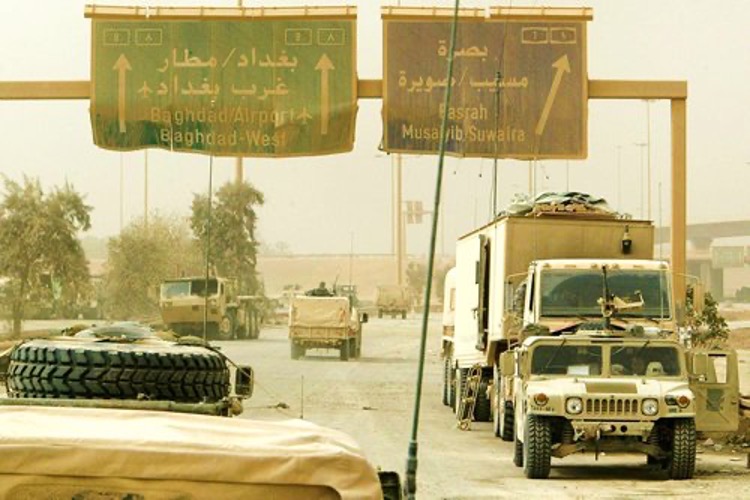
Military traffic in Baghdad
We were all new contractors experiencing our first day in Iraq. The drive towards the city of Baghdad was uneventful, but nerve-wrecking. Every civilian vehicle was suspected of being a suicide bomber. Before coming to Iraq, I took some time to research the country and its capital, Baghdad.
I read the Tigris River ran through the city and it had been a symbol of prosperity in Iraq for a long time. It used to be the main source of water, food and transport for the local population. Since the US–led invasion in 2003, it had turned into a graveyard with bodies polluting the river. Oil derivatives and industrial waste, as well as US and Iraq military waste, caused further pollution.
We crossed the Tigris River, and I thought about the age of the river. It had been flowing here long before the biblical times. We passed an area known as the green zone. It was a fortified area surrounded by high concrete blast walls and barbed wire fences, with gun posts manned by snipers on the lookout 24 hours a day for insurgents trying to plant bombs near the entry control points.
We were taken to the Baghdad hotel. The hotel was full of foreigners, most of whom were contractors living and working from there. We were told that we would only stay there for a few days. We were also told that insurgents frequently shelled the hotel with mortars and rockets. After we were fed and given our rooms, I fell asleep just to be woken a few hours later by explosions. The hotel walls were shuddering and shaking. The next morning at breakfast we heard that there was a rocket attack on the hotel.

After breakfast, we were taken to camp Victory, where we had blood group verification done and a passport-size photo taken. Questions about our next of kin were asked. Later in the day, we were issued with an identification card also known as the CAC Card. As we worked under the American Department of Defense, this card had all of your details recorded on a chip in the card in case of injury or death. The CAC card was our passport in Iraq. We were also told that if you were to be seriously injured, you would be flown to Germany for hospitalization.
Camp Victory was a military base run by the United States forces after their invasion of Iraq. This was the American Military headquarters in Iraq. The camp was enormous. There were manmade lakes and palaces built by Sadam Hussein. It is said that Sadam and his elite used it as a country club that included a small zoo and a casino during Sadam’s reign. This was also where Sadam Hussein was jailed by the American Military.
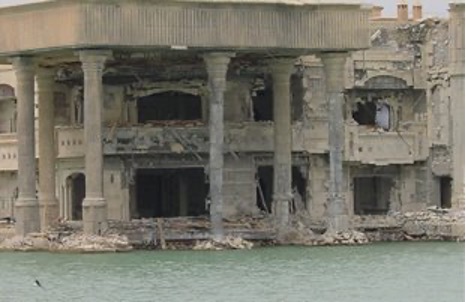
One of the Palaces that was bombed by the US
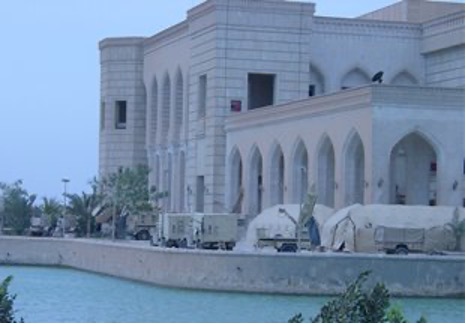
Saddam's Palace in Camp Victory
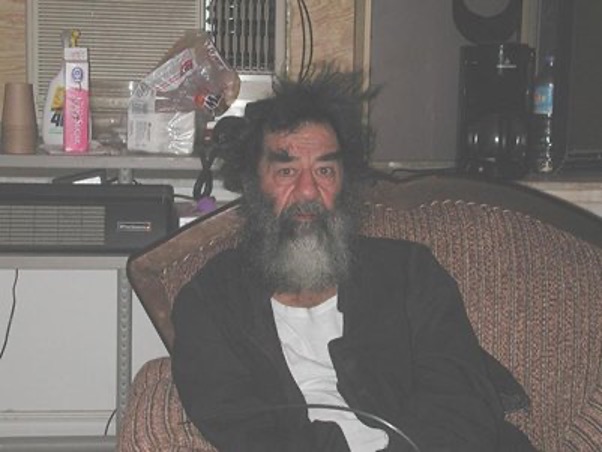
Photo of Saddam Hussein a few hours after his capture by US soldiers

Saddam's luxurious Presidential Complex
During our day at Camp Victory, we were told to go and eat in the DFAC (Dining Facility) as the Americans call it. We could not believe what we were seeing. The food that was on the menu was anything from pizzas to burgers to cooked food. Fish, pasta and salads. There were ice cream machines and fridges fully stocked with tins of cold drinks. There were deserts. It was unbelievable.
We were laughing when we thought of the little choice of food we had during our military or police training and even during our times in our own wars on the borders of South Africa. These Americans were well fed. Needless to say, we enjoyed our lunch at Camp Victory.
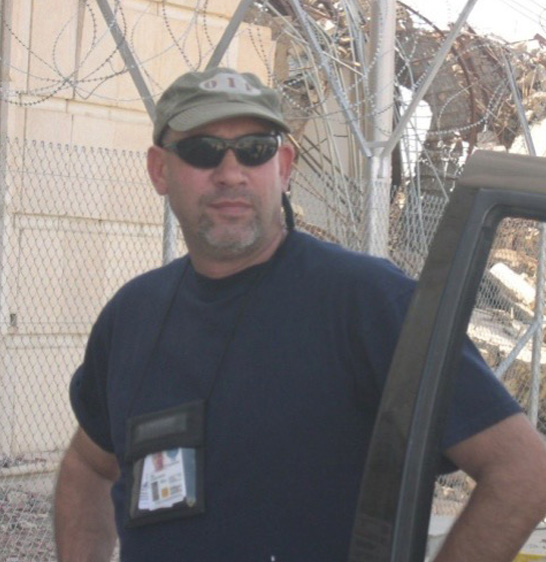
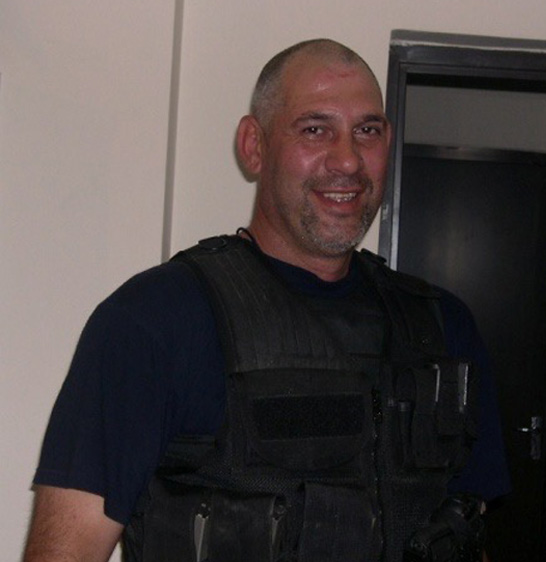
In Camp Victory – Ready for the day’s challenges in Baghdad
During our day at Camp Victory, we were told to go and eat in the DFAC (Dining Facility) as the Americans call it. We could not believe what we were seeing. The food that was on the menu was anything from pizzas to burgers to cooked food. Fish, pasta and salads. There were ice cream machines and fridges fully stocked with tins of cold drinks. There were deserts. It was unbelievable.
We were laughing when we thought of the little choice of food we had during our military or police training and even during our times in our own wars on the borders of South Africa. These Americans were well fed. Needless to say, we enjoyed our lunch at Camp Victory.
We were all part of a PSD team. The PSD Teams, Personal Security Detail. A protective team assigned to protect the personal security of an individual or group.
We were also known as private security contractors and we could carry firearms to protect our clients in a hostile environment of a war zone.
Back in our own country, our government threatened us with prosecution under the law of foreign military aid, as Iraq was regarded as a country of conflict. We were not involved in doing any military duty. We were involved with the rebuilding of the interim government and supplying humanitarian aid even if we were carrying weapons to protect our clients that were supplying these services.
Our clients were from an American Environmental Company. They supported the US Army Corps of engineers in Iraq by deploying task organized teams to designated locations in Iraq, conducting operations to remove or demilitarize all captured enemy ammunition. That included all munitions whose prior exposure to adverse conditions warranting the classification as unexploded ordnance. In short, they were called the EOD (Explosive Ordnance Disposal) Technicians.
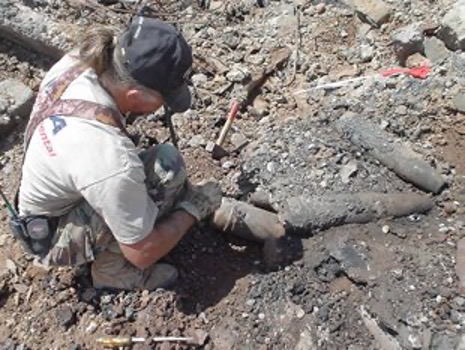
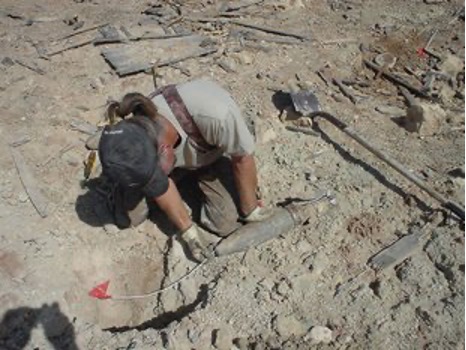
One of Our Clients (EOD) Technicians in Action
Iraq was and still is considered the largest junk yard of weapons in the world. The cities, villages, roads and desert are strewn with projectiles, bullets and missiles. Landmines, mortars and rocket-propelled grenades. The problem with this was the use of these munitions by insurgents to create and build IEDs killing many soldiers, contractors and civilians.
We escorted our clients to these designated locations in a convoy of vehicles. Once at the site, the clients stayed in the vehicles while a few of us screened the area for booby traps and/or snipers. Once we deemed the area or site safe, the EOD team will come in and identify the ordnance on site and determine how best to dispose of it. During this time, we would guard our clients with a cordon of vehicles from a safe distance, whilst two of our PSD members would stay close to the clients on the site with a medic.
Once the EOD team stockpiled the ordnance and was ready to detonate it, we would withdraw a few hundred meters to prepare for the detonation, and watch the big black mushroom cloud as it sprang into the sky. With it came the burning smell I smelled the day I got off the plane in Baghdad airport.

Stock piling of munitions to be destroyed by controlled detonation

Chapter 28 – 12
Stock piling of munitions to be destroyed by controlled detonation
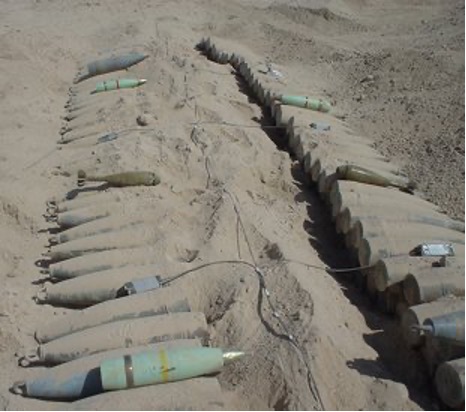
Munitions ready for controlled detonation
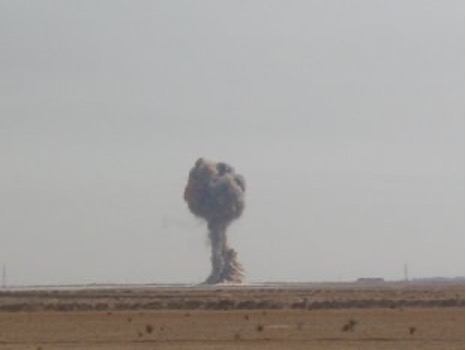
Controlled detonations viewed from different distances depending on the type of munitions destroyed at that stage
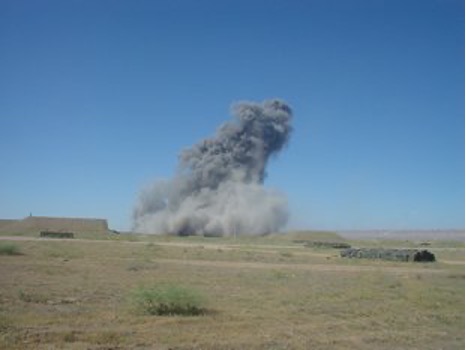
Controlled detonations viewed from different distances depending on the type of munitions destroyed at that stage
We had a few close calls during my time in Iraq. One of them worth mentioning happened whilst we were on the shooting range just outside Baghdad. We were getting used to the American weaponry we were issued with. It was the American 5.56mm M4 and the M249 light machine gun 5.56mm, also known as the SAW. We just arrived at the shooting range to practice, when the earth shook and a massive explosion was heard.
‘That was a big one,’ one of the Americans on our team commented.
Travelling back to town after we finished practising, we saw a big cloud of smoke hanging ahead of us. As we approached it, we saw a scene of utter devastation. A truck bomb had exploded. The buildings close to where the explosion took place were flattened. Cars and buildings still standing were burning. People were lying all over, dead or wounded.
I realised we had driven right past the spot where the truck stood about 20 minutes before the explosion took place on our way to the shooting range. It was a horrible sight, and we had to divert for a few kilometres to get past the devastation.
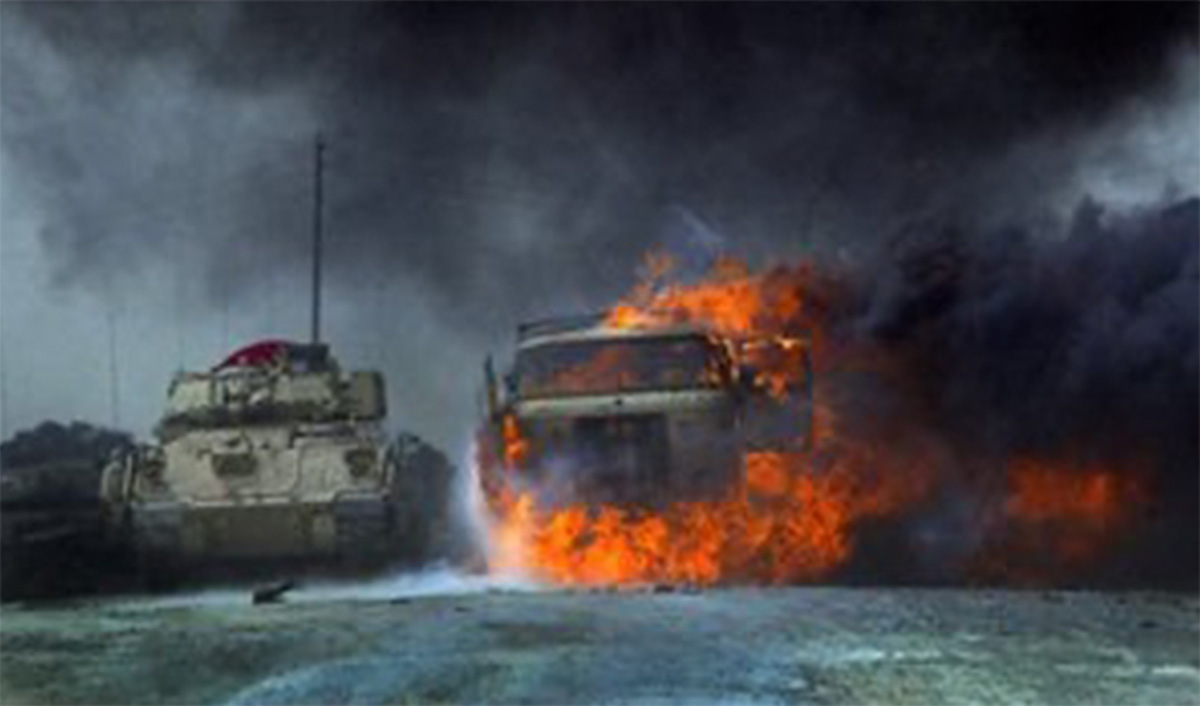
Burning vehicle after truck bomb exploded close by
That night, there were no jokes or laughs at the dinner table in the hotel where we were staying. The guys were all thinking about the close call we had. Days before this event, we were shown videos of contractors being killed by insurgents during the past year. We were also shown a gruesome video of contractors that were captured by insurgents just outside of Baghdad a few months before our arrival. They were decapitated in the video. All this was to make us aware of what would be in store if captured.
The next morning, our medic, a friendly guy from Johannesburg, informed us he was resigning and returning to South Africa. He had a young wife and his first child was born a few weeks before he left for Iraq. He said that he came to make money for his family and not to die here. We all understood and wished him well, said our goodbyes, and he left. I knew that the videos we were shown and the close call of the previous day had a lot to do with his decision. We were two months into our contract at this stage. Our team comprised eight South Africans, six Americans, one Bulgarian, and a New Zealander.
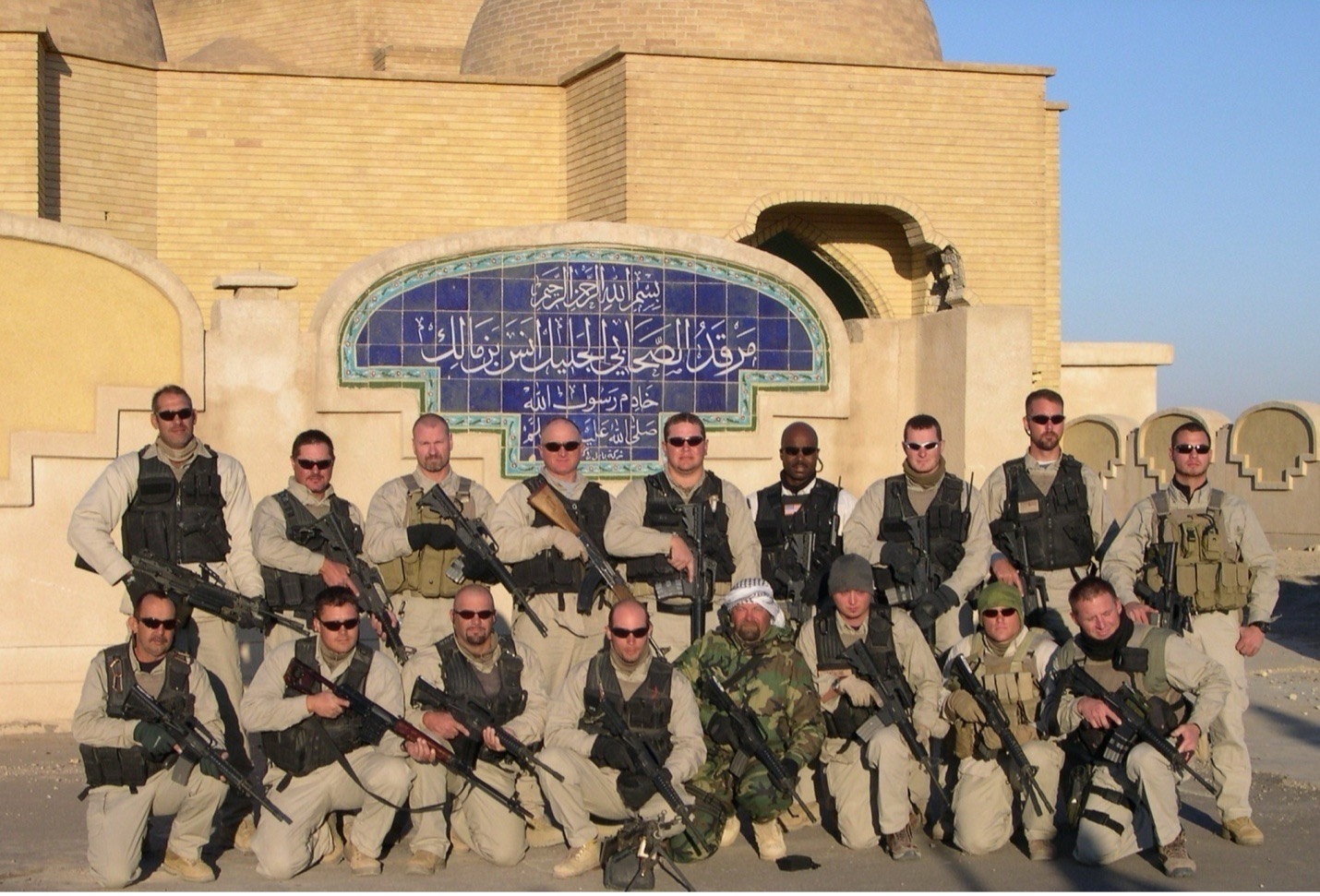
Photo taken in front of a mosque in Basrah
We got word that we were leaving the Baghdad area for a new city and a new area that was given to the EOD Team, our clients. We were to travel to Basrah, a 500-kilometre drive from Baghdad. Our vehicles were double-cab Ford F250S. My vehicle was the tail gunner vehicle as we travelled in the last position of the convoy. In our vehicle, I was the front gunner sitting in front as a passenger with my driver, also a South African, and on the back, we had built a steel cage in which our tail gunner, the New Zealander, was sitting with a (saw) machine gun mounted pointing to the back. During our travels, I had the same type of weapon sticking out of my passenger window.
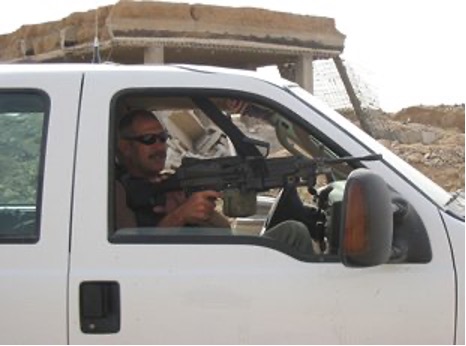 The rules of travel with the weapon pointed out of the window while travelling in a convoy during my time in Iraq
One rule was no vehicles could enter spaces between our vehicles or anywhere along the convoy. The sign that was given to other civilian vehicles to stay away was a clenched fist. If they ignored it, we could fire at that vehicle. The reason was that there were suicide car bombers who targeted the contractors and military convoys. They would drive between the convoy and detonate their explosives, killing themselves and the vehicle occupants in the convoy.
The Americans had the saying, ‘To win the hearts and minds of the Iraqi people.’
‘This would never work, ‘ I told my driver one day as we were stuck in Baghdad traffic in the city in our convoy, and he pushed a civilian vehicle out of the way with our big Ford truck.
‘How could you win their hearts and minds if every foreigner pushed them out of the way and shot at their vehicles in their own country?’
I must also say that after the US invasion of Iraq, anybody and everybody who could get a vehicle were driving, and it was chaos in the city. There were no traffic rules, and I often wondered how many of these civilians had a driver’s license.
Then again, a stationary military or contractor’s vehicle was a lovely target for the insurgents. The day came that we had to leave Baghdad, and I felt relieved as we were targets in the city and were shot at from buildings. It happened daily to many contractors and military personnel.
The trip to Basrah was nerve-wrecking. Any vehicle parked next to the road was a potential VBIED, and any object, even a dead animal, could hide an IED.
The other problem we had to know about was the bridges we passed under. It was known that snipers were hidden on the bridges, taking shots at passing vehicles. We arrived at Shaibah Air Base seven hours after leaving Baghdad. The Air Base was eleven km from the city of Basrah.
This was where we were going to stay and operate from. It was the site of a British Military hospital and also the British military’s logistics base.
The Royal Air Force established it during the 1920s as RAF Shaiba. In 1956, it was handed over to the Iraqi Air Force, and it became an Iraqi Air Force base. During 2003, it was captured by the Coalition forces and the British re-took possession of the base.
This base was in the desert, and it was a harsh and hot climate. We were living in containers on wheels. Lucky for us, we had air conditioners in our small rooms. Every day we went out into the desert with our clients, where the unexploded ordnance was strewn across the desert.
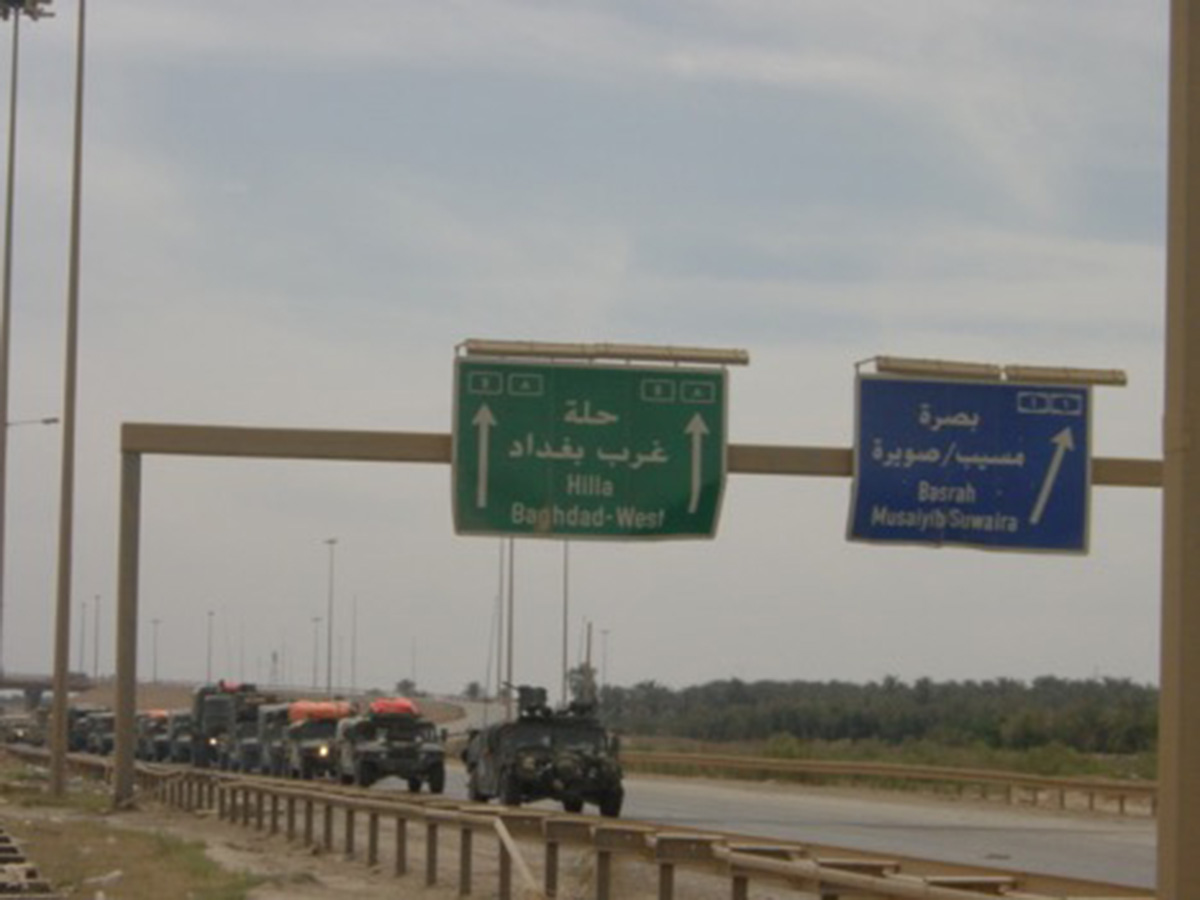
Military Convoy in Baghdad City
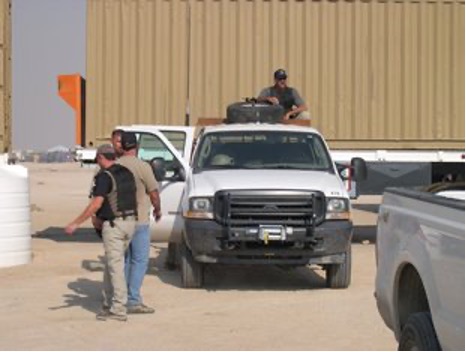
Setting up Camp in Basrah

Our accommodation in Basrah
The other problem was that most of the ordnances were from the Americans themselves. The longest air war in history was aimed at Iraq. Since 1991 until 2003, the US and its allies conducted a low-level air war to enforce no-fly zones over Northern and Southern Iraq, while attacking Iraqis’ air defense and other targets.
During February 2003, the US conducted a blistering ‘shock and awe’ campaign and by April 2003 Iraq had been subjected to 41 000 sorties and 27 000 bombs were dropped. The 2003 invasion of Iraq lasted from 20 March 2003 to 1 May 2003 and signaled the start of the Iraq war, which was named as Operation Iraqi Freedom by the US. The trigger for the invasion was Iraq’s failure to take a final opportunity to disarm itself of alleged nuclear, chemical and biological weapons that the US and British officials had called an immediate and intolerable threat to world peace. The rest is history.
The problem facing our clients was that they had to defuse unexploded US ordnance as well. One bomb that they were very cautious of was the size of a baseball. The US did what was called carpet bombing. B-52 bombers would drop a large casing on troop encampments, airfields and storage sites. This casing contained numerous small bomblets inside it. Upon impact, the little bombs dispersed over a large area and before exploding. Some did not explode and laid armed. Any footsteps close to it or picking it up could cause it to explode. True to the word, it was literally a ticking time bomb.
Our clients had to use all their expertise and stealth to do controlled detonations on these types of explosives. They destroyed hundreds of them.

Unexploded Iraqi Ordnance scattered in the Desert
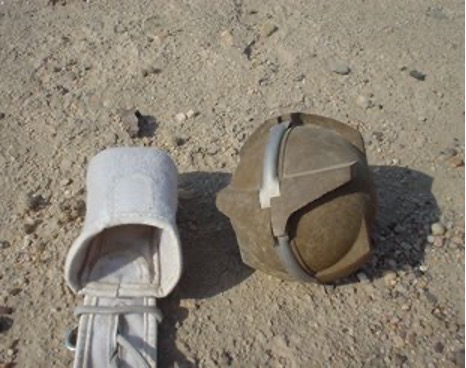
US baseball shaped bombs dropped on Iraqi troop encampments during the Invasion The size of the bomb is illustrated next to a cell phone pouch
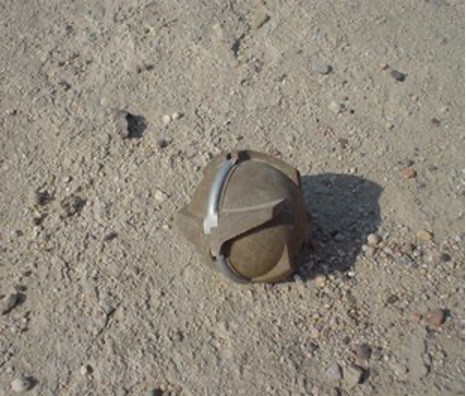
Small but deadly, ready to explode at the slightest of movement
It was also quite interesting to see South African-made mortar shells and missiles in Saddam’s arsenal. The UXO Team knew the type and manufacturer of the different types of weapons by just looking at them. So, every time a South African-made weapon was found, the technicians pointed it out to us.
It was no secret that during the Iran/Iraq conflict of the 1980s and the Persian Gulf war of early 1991, South Africa had sold G-5 towed howitzers to both Iran and Iraq and G6 self-propelled Howitzers to the United Arab Emirates.
It is a known fact that during the numerous international embargoes against arms trade with South Africa in the 1970s and 1980s, South Africa nonetheless developed the most advanced military-industrial base in Africa.
We were always alert during travel to and from these sites. Protecting the clients on-site was a boring time out in the desert. The flies were terrible. Big black swarms of them swarmed the sites where we were parked. The driver of our vehicle always took a fly swatter with them. While sitting in the vehicle, he would swat flies. I think his record was 960 flies in five hours. One day, he told him he must be the world’s most highly paid fly swatter. At the end of our shift and back at the base, he had to wash the interior of the cab every night to get rid of the filthy fly shit.

My Office in the Desert
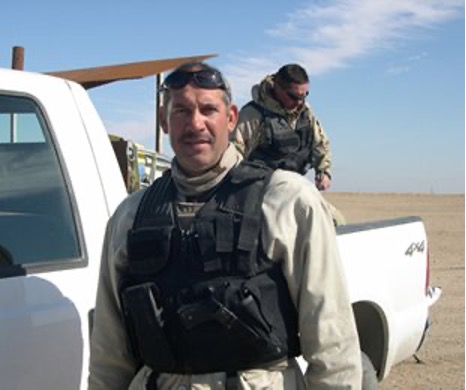
Site Inspection
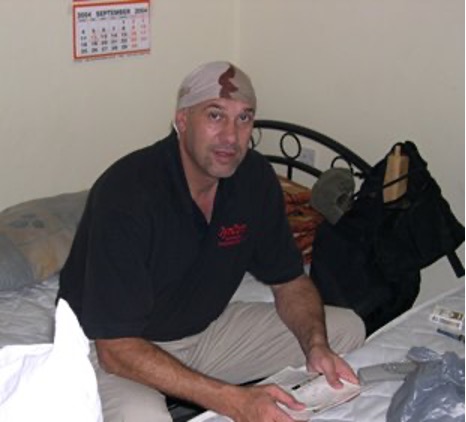
Relaxing after a day in the Desert

Our trusted Vehicles used for our Convoy travels in Iraq the Ford F350
Being stationed at a British base, we ate in their mess hall. The food was the same as what we were used to on our South African military and police menus. It was slop. We sorely missed the American DEFACS we had in Baghdad.
The only highlight we looked forward to was the trip to Kuwait City. We did it once a month. We would travel there, cross the Border from Iraq into Kuwait to get supplies, hang around in civilisation for a few hours, eat junk food, and stock up on cigarettes. The cigarettes available in Basrah were all counterfeits. Crossing the border from Iraq into Kuwait felt like entering an oasis.
Despite Kuwait’s average annual rainfall of 110 mm and no freshwater streams, with freshwater resources limited to desalinated seawater, there was greenery everywhere.
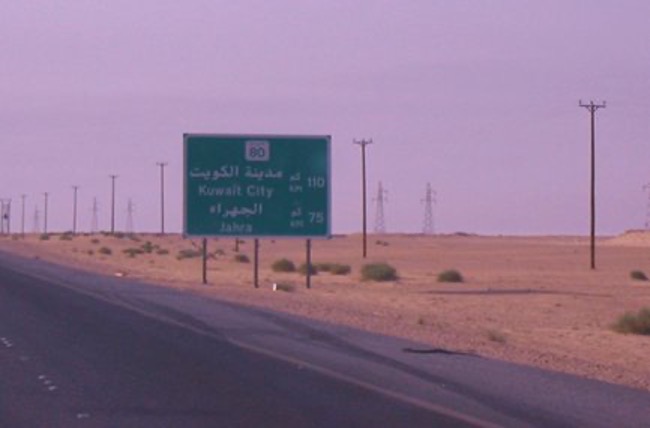
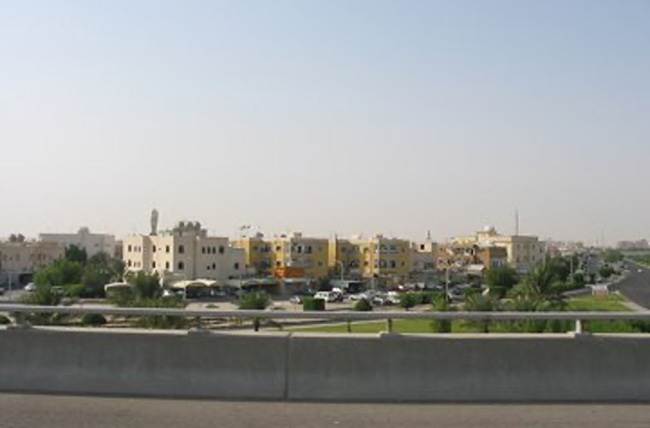
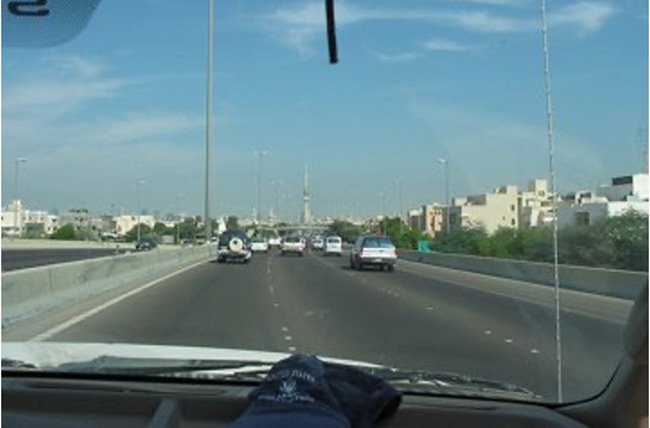
Kuwait City
The distance from Basrah to Kuwait City was about 180 km, a three-hour trip. Travelling on Highway 80 from Basrah, the road we travelled was called ‘The Highway of Death’. All along the route were the remains of mangled Iraqi military vehicles. As the Iraqi military withdrew from Kuwait during February 1991, they were attacked from the air by the US and their allies. Iraqi tanks, armoured vehicles and troops fleeing the allied onslaught formed huge queues on the main road ‘Highway 80’, which runs north from Kuwait to the southern Iraq city of Basrah. US planes trapped the long convoys. The Iraqi vehicles were strafed or bombed, killing hundreds of troops in their cars. Tanks were burned and reduced to shrapnel. Hence the name ‘The Highway of Death’.
One of the contractors on our team was a former Ranger in the American Military. He was well-liked by the South Africans on our team. He was very interested in South African history. He was always chatting with the guys, telling stories about his time in the Rangers and asking questions about the South African border wars. He knew the subject, and he knew where South Africa was.
One night, we were sitting outside our containers chatting with him, and the question of why the invasion of Iraq by the US came up once again. Seeing no weapons of mass destruction had been found yet, our Ranger friend said something I will always remember.
‘You must remember the USA is a mighty war machine, my friends, and any machine will always need oil to run on. We all know how rich in oil Iraq is, right?’
This American took his leave and went to South Africa for a visit. Some of the South Africans in our team set him up with contacts back home in South Africa, and he was well cared for whilst visiting. Upon his return, he was questioned about his time in South Africa. He said he loved it and that South Africa reminded him of California in the early eighties. If that was good or bad, I don’t know, but at least he said that he will go back to SA for a longer vacation in the future.
As hot as it was in the desert, the cold came in overnight. It was cold, and it was December, winter in the Middle East. By this time, I had been in Iraq for four months and was happy to be returning to South Africa for my month’s leave. Some of my team members returning from their leave told us some of them were questioned upon their arrival at the airport in Johannesburg by the then Scorpions or the Directorate of Special Operations. Our government was looking into the movements of the contractors operating in Iraq. It had to do with the mercenary issue. As I mentioned before, we had nothing to do with fighting any wars in Iraq, so we were not concerned, as at that stage none of the contractors who were questioned were arrested.
I said my goodbyes to my team and flew back to South Africa. Upon my arrival, I was questioned. I produced and showed them my contract I had with a well-known American company. Personally, I think it was a fishing expedition trying to establish who was working where in Iraq and employed in which capacity.
The only South Africans I knew that were actively involved in the war in Iraq the year before were South Africans who joined the British military with British passports because of their British descent. The rest of us were contractors trying to earn an honest salary in a very dangerous environment because we could not get any work in our own country.
When I left Iraq during December 2004, there were 1000 South Africans working in Iraq as private contractors. Eight South Africans were killed in different areas in Iraq because of car bombs and ambushes. The last stats on South Africans killed in Iraq I could find were until 2011. 29 South Africans lost their lives while performing duties as security contractors.
During January 2005, I flew out of South Africa returning to Iraq to continue with my contract. I flew to Kuwait where my team was to fetch me, taking me back with them to Iraq. Arriving in Kuwait, I received a message from my team that there was a ban on driving civilian vehicles on roads as it was the Iraq Parliamentary election and that I should try and hang around for a few days until they could travel to fetch me. I had no Kuwait visa, so I hung around the airport and on the second day, the Kuwait security police arrested me.
They questioned me and placed me in a holding cell at the airport. I contacted my company and lucky for me, they had an office in Kuwait. One of their employees came to the airport and confirmed that I was an employee of theirs. I returned to South Africa to wait there until road travel re-opened. Trying to go back from South Africa did not happen as my team, in the meantime, was disbanded and re-divided into other teams all over Iraq.
With the new Iraqi government, it also became difficult to get a visa to work in Iraq. This happened not only to me. There were a few contractors who went on leave and afterwards they could not get back into Iraq.
It was a great experience. Some guys I worked with stayed in Iraq for several years.

Photo by Image by freepik:
